

Expanding a software startup into Europe might sound like the next logical step for growth, but it’s not as simple as setting up shop and expecting the revenue to flow in. There’s a lot at stake between managing cultural intricacies, complying with local laws, and understanding market dynamics.
Are you prepared to make informed decisions, or will you fall into the trap of applying a one-size-fits-all approach?
In this comprehensive guide, you’ll find actionable insights that cover everything from local hiring to sales strategies, helping you navigate the complexity of European markets.
Succeeding in Europe is not just about translating your website into multiple languages; it’s about adapting your entire go-to-market strategy.
HAVE A PLAN

👉 Know what to expect to avoid disillusion:
- Economic situations differ from one country to another, and a boom or bust in one does not bode well for the condition of another.
- Market size and dynamism: Continental Europe is traditionally a risk-averse slow adopter. Be prepared to prove your value, to start with small deals or proof-of-concept before making big ones.
- Salaries and costs: it is almost impossible to compare the total price of an employee from one country to another because the components are so different. For instance, in France, you’ll have to pay employer charges on top of the gross salary of 43%. Your employee must also spend around 22% in payroll taxes. But these charges include contributions for social security, unemployment insurance, old-age insurance, and complementary pensions… all of which are not included in the salary of an employee in the US or the UK but are undoubtedly necessary to be attractive on the job market. All in all, your French employee will appear to be the one who costs you the most when he is not, but he will undoubtedly be the one who receives the least (54% of the cost). Moreover, your company may already be renowned in your local market, but it probably needs to be discovered in Europe. Joining you means taking a risk for your employees, and it’s fair to compensate for this by paying a higher salary than the labor market.
- Rentability: have a 3-year investment plan. Be prepared to lose money in the first year (investment), break even in the 2nd year, and expect profits in the 3rd year.
- Cultural differences (not to mention languages): we’ll return to this point later. Harvard Business Review points out that Salesforce had difficulty gaining traction in Germany due to the local business culture’s emphasis on data privacy and hesitancy toward cloud-based solutions. Understanding these subtleties could be the difference between success and failure.
👉 Choose the suitable Go-To-Market model: each model has advantages and disadvantages, and the one you apply in the US or UK may not be ideal for the European market.
- Direct sales
- Indirect sales through OEM, resellers, and VARS
- Franchise
- Hybrid model
👉 Share your plans with the team: help them understand your specific regional goals so they can contribute better.
- Get their support
- Please help them to help you
- Motivate them and prevent their deception
👉 Embrace and learn from mistakes to adapt your European expansion plans
- Cash test your plans: replace the country names with China and Japan. Would you do the same?
- Iterate with your local managers
- Persist for a few months
- Adapt to the reality every 6 months
Getting a foothold in continental Europe is much more complex than opening a new branch in the US or UK. Having a realistic plan for growth over time is a guarantee of seriousness for both your customers and your employees, and a key factor in your success.
💶 DON’T CUT ANY CORNERS

👉 Set up local legal entities to reassure your customers and employees: Ernst & Young found that 78% of businesses prefer to engage with companies that have local legal entities. This reduces legal complications and builds trust, a crucial aspect for any expanding business.
👉 Pamper your local teams more than those in HQ: they’re on their own, have almost exclusively professional exchanges with people at head office (no small talks around the coffee machine), and don’t benefit from the advantages you offer at head office. They should feel just as appreciated as the others and not be second-class employees. Here are a few suggestions:
- Gym membership or funding for sports membership
- Supplementary healthcare insurance (compulsory in some countries such as France, but at a much lower cost than in the USA or UK)
- Higher rates for travel expenses (hotels, restaurants, etc.): they devote time to you when they’re away from their families. The least you can do is provide them with the same or better comfort than they would have at home.
- Home office installation package (internet and mobile access, screen, keyboard, printer, etc.)
- Regional internal events: Particularly if your team is working from home or geographically spread, monthly or quarterly on-site internal meetings are an opportunity to bond teams, exchange local best practices, and consolidate the feeling of belonging to the team.
👉 Give your team the critical mass to have an impact on the market
5 people (1 GM, 1 AE, 1 SDR, 1 PAM, 1 Field Marketing) per sub-region
- You’ll need a minimum of 6 months to set up your team
- If there aren’t enough of you, you won’t be credible on the market.
- Your sales staff will be dispersed in tasks that are generally not theirs and in which they do not necessarily excel.
👉 Hire senior people only at the beginning
- You are discovering a new market: you can’t afford to have people learning their job. The Journal of Business-to-Business Marketing reports that high employee turnover could cost B2B companies up to 200% of an employee’s annual salary, underscoring the importance of hiring the right people from the start.
- They know the market and have a potential customer address book
- They are autonomous, and they don’t need micro-management
- Offer attractive salaries as people are taking risks to join you
The human and financial investment involved in conquering Europe is higher than it seems. While you will be able to make savings on structural costs (R&D, IT, finance, HR) initially, the cost of the local value chain (lead generation + sales + post sales) will no doubt be comparable to the cost of your company’s first sales.
💪 Empower your local team

Let your team express its superpowers. The acquisition of LinkedIn by Microsoft serves as a textbook example of local team empowerment. Forbes notes that the local teams were given significant leeway to adapt strategies to their markets, contributing to LinkedIn’s rapid global expansion.
One of the most common mistakes is to think that what the HQ teams in the US or UK have done successfully can be repeated in Continental Europe. Ask yourself if your HQ teams have enough international experience to make the right decisions that will affect our success in Europe. Going on a summer holiday to France can’t be considered as a global experience 😉. An excellent way to gauge their proficiency is to see if they know at least one language besides English.
Your local team is a natural extension of your company: give them the power! The lack of delegation is one of the primary reasons for the failures I have experienced in my professional experience.
👉 Priority markets/customers: your local team knows the market, the players involved, the competitors, the partners, the influencers… They are familiar with your successes and references and learn how to assess whether they can be easily transposed, need to be adapted, or develop a different approach.
👉 Pricing/discount delegation: wages, the cost of living, and competitors vary from one country to another, and so do prices. Nobody knows the local market as well as your teams.
👉 Marketing plans decisions: it’s unlikely that your HQ marketing team knows the local press, journals, magazines, websites, media, trade fairs, major events, suppliers… Again, your local team is a valuable asset and should be involved in decision-making.
👉 Hiring process influence (profile, salary…): hiring rules and deadlines are specific to each country. Generally, the labor market is less fluid in Europe than in the US or UK. As mentioned in the previous post, comparing salaries from one country to another is difficult. Finally, your reputation and standing in your home country differ in Europe, where you may be unknown. More than your HR HQ, your local management will help you to calibrate the suitable profiles and salaries better.
Since you’ve decided to hire a local team instead of going for remote telesales, it’s best to place your trust in them!
🌍 Become a global company
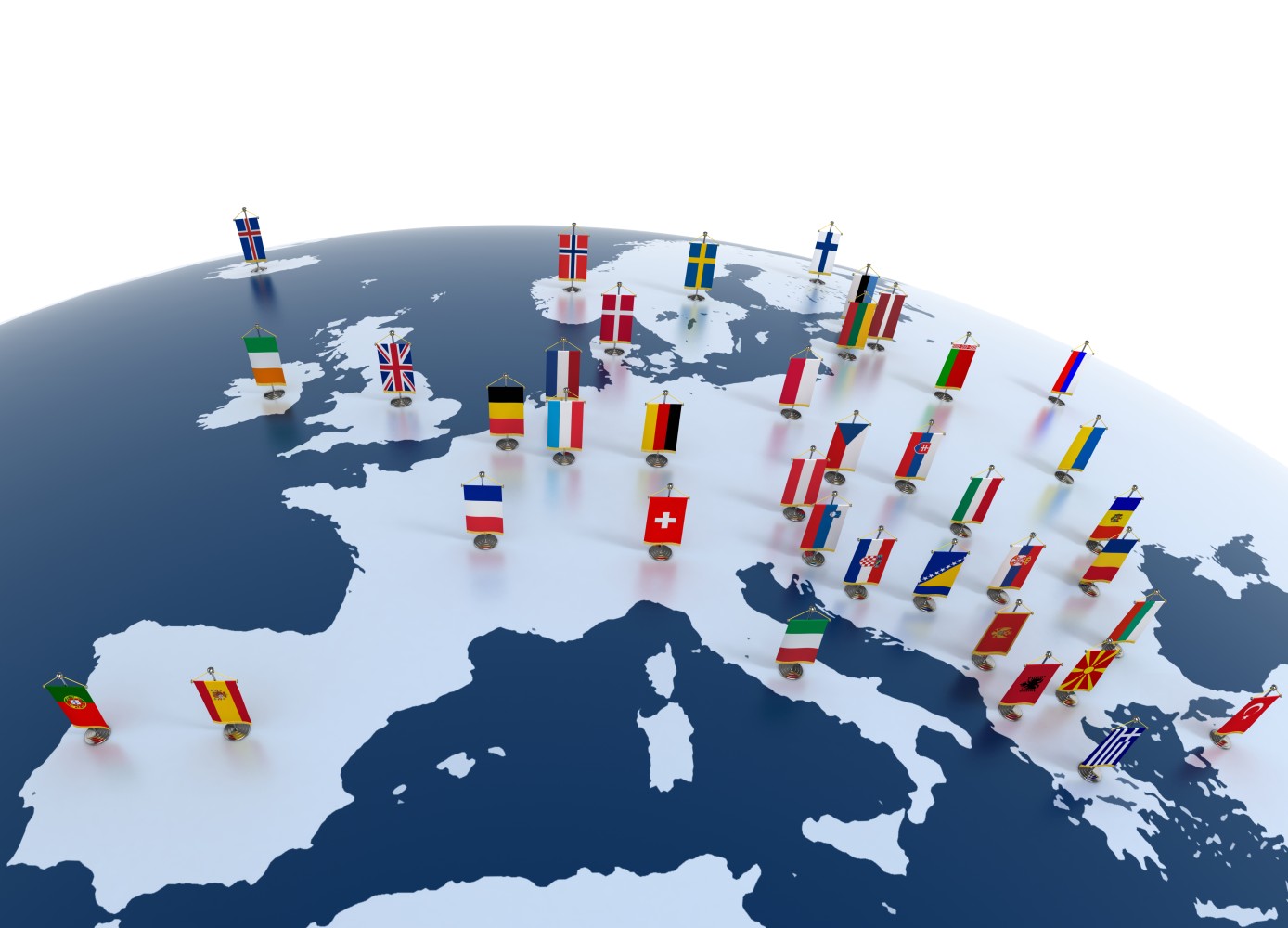
Transforming into a truly global company is the most complex challenge.
The illusion that the world is flat or has become a global village clashes with reality in Europe. And if you thought English was spoken everywhere, forget about it. Here are a few points that seem crucial to me:
👉 Accept cultural diversity and localize: 46 countries and 24 official languages, a rich past, age-old antagonisms, different customs and habits… Like it or not, you must deal with a continent where McDonald’s is universally established. However, the football world championship final is not the Superbowl, and cricket rules are unknown. Every nation is proud, and not respecting its culture and language is seen as an insult.
A funny example of localization gone wrong could be the case of the Chevrolet Nova, although it’s often cited as an urban legend. The story goes that when Chevrolet tried to market the Nova car in Latin American countries, they didn’t realize that “No Va” in Spanish means “Doesn’t Go,” which is a terrible name for a car. Although debunked, this example is often used humorously to highlight the importance of proper localization.
Imagine launching a software solution in France under a name that translates into something awkward or inappropriate. Not only would it be a marketing disaster, but it would also give competitors a reason to poke fun at you. Therefore, proper localization is not just about language; it’s about understanding culture, idioms, and humor.
👉 Decentralize your IT: are your central IT team’s procurement and maintenance processes adapted to the purchase and management of the French, German, Spanish, Swedish, Danish keyboards, etc., 220V sockets and power supplies in European format? Are the security procedures adapted to the HQ local network appropriate for remote working? Shouldn’t local teams be given greater flexibility and administrative rights?
👉 Put aside the woke culture: Woke culture corresponds to purely Anglo-Saxon problems, and positive discrimination is particularly offensive in countries like France, where equality is in the law and where the private sphere, such as religion, sexual orientation or political ideas must remain at home, not to mention ethnic classifications which are pretty simply forbidden. The woke culture and its good intentions appear counter-productive outside the professional context, even an invasion of the private sphere.
👉 Think small if you’re from the US, but be humble if you’re from the UK: considering the size of the markets in Europe, it’s better to be prepared for what we can expect. Here are just a few facts to put things into perspective:
🇪🇺 vs 🇺🇸: think smaller
- Europe’s surface is 2.32 times smaller
- There are 1.37 times more inhabitants in Europe
- US GDP is 1.4 times larger than Europe’s
- GDP per capita is 2 times smaller
🇪🇺 vs 🇬🇧: think big
- Europe is 17.42 times larger than the UK
- There are 6.65 times more people in Europe
- UK GDP is 5.3 times smaller than Europe’s
- GDP per capita in Europe is 1.25 times smaller
Fortune Top 500: be humble
- 🇺🇸: 124 companies
- 🇪🇺: 105 companies
- 🇩🇪: 28 companies
- 🇫🇷: 25 companies
- 🇬🇧: 18 companies
👉 Tolerate non-politically or grammatically incorrect expressions by non-native English speakers: never forget that the people you’re talking to don’t have the same range of words and expressions as you do and that the quality of their communication may be reduced.
👉 Refine the internal communication
- Avoid idioms
- Avoid non-common acronyms
- Avoid local cultural references (such as American football, baseball, cricket, TV presenters, TV shows, or movie titles)
- Put aside your preconceptions, avoid clichés and bias
- Think about time shifts for your meetings and your calls…
- Have at least one website landing page in the local language
👉 Accept local market specificities: what works in the UK or the US doesn’t necessarily work in Continental Europe, and read my post about local team empowerment to know more.
Being a company with offices abroad does not mean being a global company. Successfully transforming from one to the other requires an understanding and acceptance of differences, both internally and externally.
Conclusion
There’s no room for shortcuts or assumptions in the quest to scale your software startup in Europe. The path is filled with unique challenges—cultural nuances, legal complexities, and market diversities—that a generic blueprint can’t navigate. A successful European venture demands a tailored approach and a seasoned guide who can turn pitfalls into stepping stones.
If you’re a CRO who values hands-on experience and granular market insights for your expansion, then you’ve just read a roadmap written by someone who has lived it.
Article originally published on LinkedIn: https://www.linkedin.com/pulse/continental-europe-unplugged-what-every-cro-needs-know-acher
 Go-To-Market Europe
Leave a comment